
PRODUCT CENTER
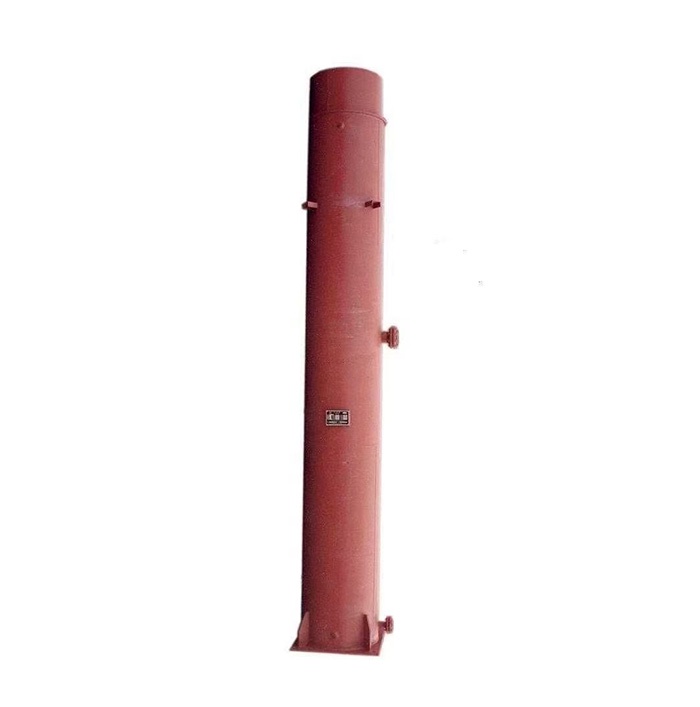

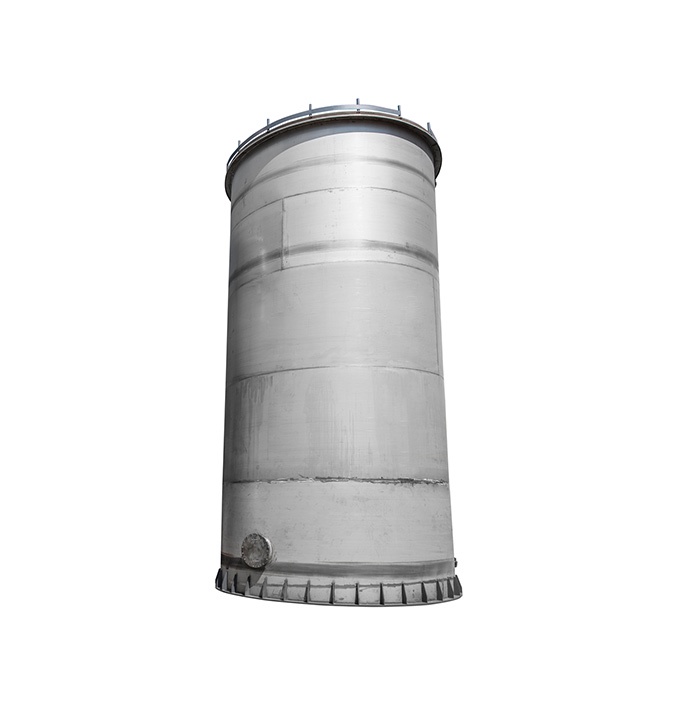
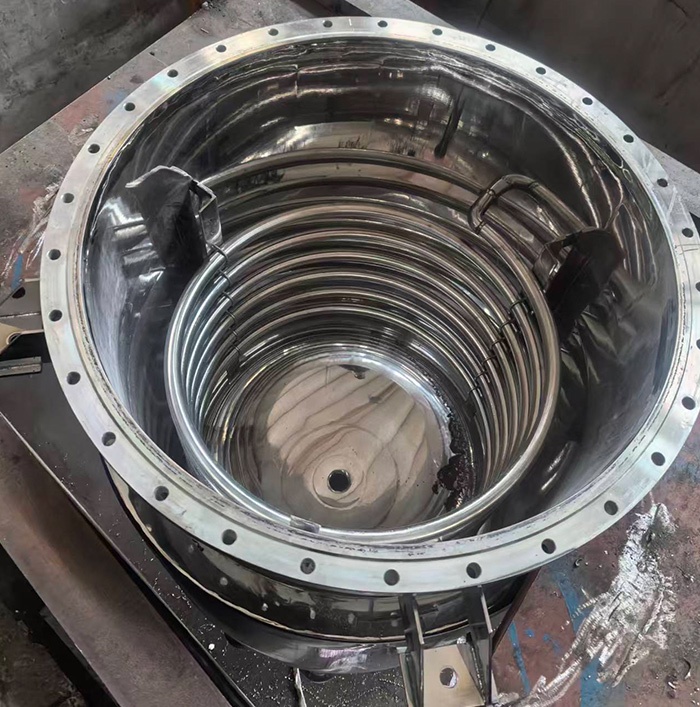
- Structural Composition: Primarily composed of an outer shell (cylinder), tube sheets, and tube bundles. The outer shell is a large cylindrical shell made of rolled and welded steel plates, with a perforated tube sheet welded to both the top and bottom ends. Numerous seamless steel tubes are fixed to these plates. A water distribution tank is installed at the top of the condenser, containing a water distribution plate to ensure even distribution of cooling water to all tube inlets.
PRODUCT PARAMETERS
Vertical condensers are a common type of heat exchange equipment. Here is an introduction to them:
- Structural Composition: Primarily composed of an outer shell (cylinder), tube sheets, and tube bundles. The outer shell is a large cylindrical shell made of rolled and welded steel plates, with a perforated tube sheet welded to both the top and bottom ends. Numerous seamless steel tubes are fixed to these plates. A water distribution tank is installed at the top of the condenser, containing a water distribution plate to ensure even distribution of cooling water to all tube inlets.
- Working principle: Based on the principle of indirect heat exchange, hot fluids (such as steam and high-temperature gases) enter the shell side from the top and flow downwards along the outer wall of the tube bundle under the action of gravity. The condensate film has a uniform thickness and a high heat transfer coefficient. Cold fluids (such as cooling water and chilled brine) flow upwards from the bottom of the tube side, forming forced turbulence, which disrupts the boundary layer and achieves efficient heat exchange.
- Material selection: For different working conditions, corrosion-resistant materials such as 316L stainless steel, titanium alloy, Hastelloy C276 or silicon carbide composite pipe can be selected. The surface can also be coated with nano-ceramic silicon carbide coating to improve the corrosion resistance and anti-scaling performance of the equipment.
- Advantages: Large cooling flow rate and high velocity, high heat transfer coefficient; small footprint for vertical installation, can be installed outdoors; cooling water flows directly with high velocity, low requirements for water quality, easy removal of scale inside pipes, and no need to stop the refrigeration system from operating.
- Disadvantages: Cooling water temperature rise is generally only 2-4℃, logarithmic mean temperature difference is generally around 5-6℃, water consumption is relatively large; the equipment is placed in the air, the pipes are easily corroded, and leaks are not easily detected.
- Application Scenarios: Widely used in chemical and petroleum, pharmaceutical and food, energy and environmental protection fields. For example, it undertakes the tasks of top condensation and bottom reboiling in the production of synthetic ammonia and methanol, ensures aseptic requirements in the cooling of antibiotic fermentation broth, and recovers waste heat from high-temperature flue gas in thermal power generation.
FACTORY DISPLAY
GET IN TOUCH
PRODUCT RECOMMENDATION
 horizontal condenserLearn More
- vertical condenserLearn More
- horizontal heat exchangerLearn More
- vertical heat exchangerLearn More
- Vibrating Screen MachineLearn More
- Vibration Screening MachineLearn More
- Bag Filter HousingLearn More
- Stainless Steel Bag FilterLearn More
- extruderLearn More
- Mobile AgitatorLearn More
- HomogenizerLearn More
- EmulsifierLearn More
- Heavy Paste MixerLearn More
- Planetary MixerLearn More
- Cylinder Cleaning MachineLearn More
- Planet AgitatorLearn More
- Concentric Double Shaft AgitatorLearn More
- Industrial Butterfly MixerLearn More
- Wall Scraping Dual Shaft AgitatorLearn More
- Concentric Dual Shaft AgitatorLearn More
- Butterfly Dual Shaft AgitatorLearn More
- Paint Mixing ReactorLearn More
- Chemical Mixing ReactorLearn More
- Multifunctional Mixing and Dispersion CaldronLearn More
- Conical MixerLearn More
- Ribbon Dispersion KettleLearn More
- Pressure ReactorLearn More
 Laboratory ReactorLearn More
- Complete Set of ReactorsLearn More
- Dispersion TankLearn More
- Storage TankLearn More
- Jacketed Dispersion KettleLearn More
- Coil Pipe Dispersion KettleLearn More
- Lifting Dispersion KettleLearn More
- High Speed Dispersion KettleLearn More
- Vacuum Dispersion KettleLearn More
- Multi-functional Dispersion ReactorLearn More
- High Speed Dispersion ReactorLearn More
- High-low Speed Dual-shaft DisperserLearn More
- High Speed Double Shaft DisperserLearn More

Get in touch with us
Phone